Emergency lighting testing
- What a year of emergency lighting tests costs
- 7,174
- Computed on this page from the inputs below
- Fittings and signs on the round
- 330
- Computed on this page from the inputs below
- Fittings a technician has to key-test each month, per site
- 94
- Computed on this page from the inputs below
- Hours one monthly test takes at one site
- 2.9
- Computed on this page from the inputs below
Every figure the worksheets return is worked from the numbers you enter. The only outside figures on this site are the test frequencies and durations the codes ask for, and each one is cited under the tool it appears in.
Email me this result
We will send you these figures and a link back to them. One email, nothing else unless you tick the box.
The figures above start from a worked example (7,174). Change any input and the answer updates as you type, the way it will the month a site adds a floor of fittings.
Download the Emergency lighting testing worked example (CSV)
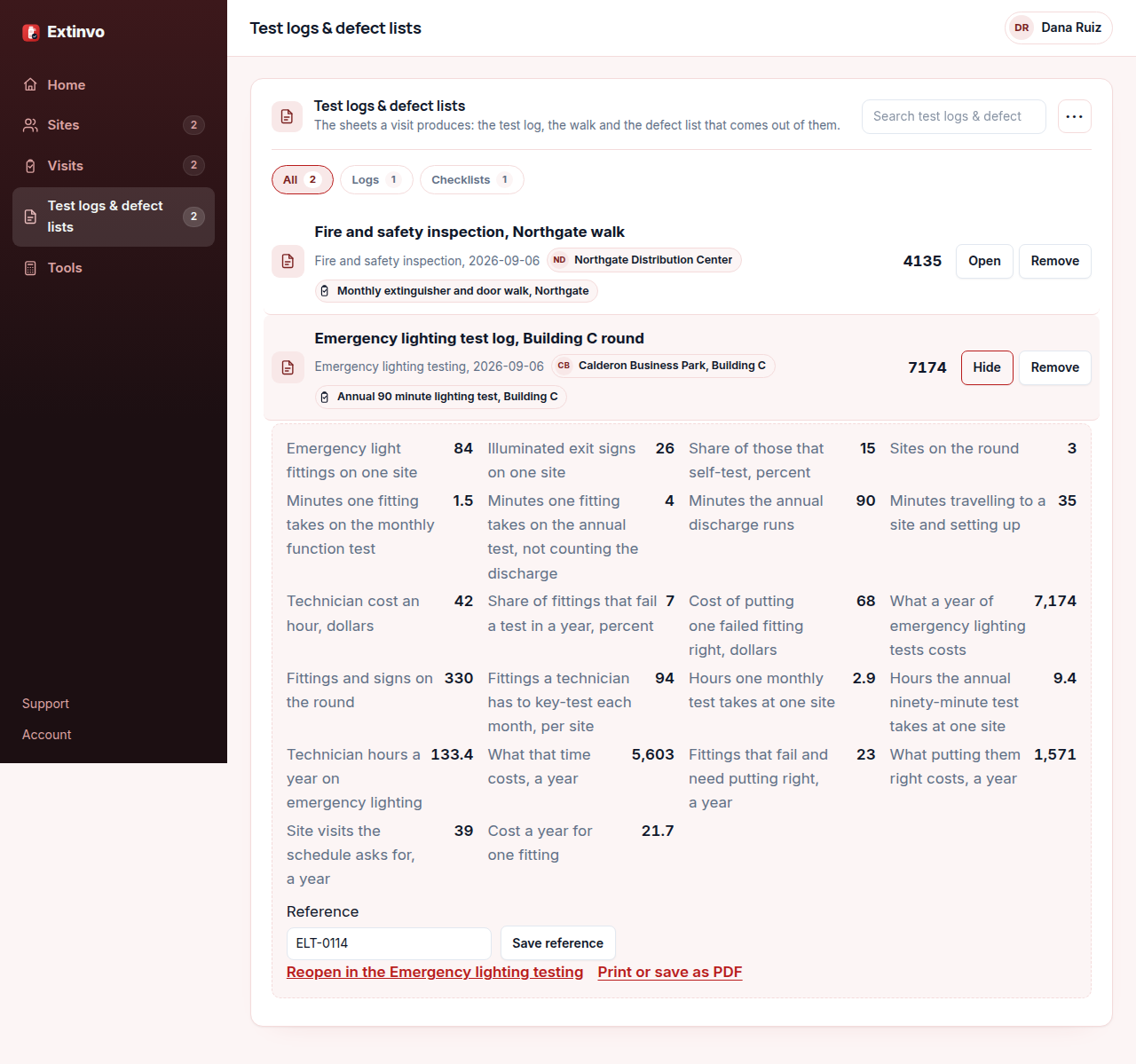
The emergency lighting test log sizes a site's testing from its own fittings rather than from a template: how many emergency light fittings and illuminated exit signs are on it, how many of those self-test, how many sites are on the round, the minutes one fitting takes on the monthly function test and on the annual test, the ninety minutes the annual discharge sits there running, what traveling to a site and setting up costs in minutes, and what the technician hour costs you. It returns the hours one monthly visit takes, the hours the annual test takes, the technician hours and the labor cost across a whole year, the fittings that will fail and what putting them right costs, and the total a year of emergency lighting testing costs for one fitting. A single office and an eleven-site round are the same arithmetic with a different fitting count.
Where the constants in this tool come from
Minnesota Department of Health, Maintenance of Battery-Operated Emergency Lights (rev. June 2024), citing NFPA 101 Life Safety Code section 7.9.3. Why the tool separates a short monthly function test from a ninety-minute annual one, and why ninety minutes is the default: this state guidance sets out the periodic testing options in NFPA 101 section 7.9.3 and states that a minimum of 90 minutes of illumination is required. It is cited for the DURATION the tool defaults to; what your own building must do is set by the code your authority having jurisdiction enforces.
29 CFR 1910.37, Maintenance, safeguards, and operational features for exit routes (2023 edition, GPO). The federal hook under the whole exercise: 1910.37(a)(4) requires that safeguards designed to protect employees during an emergency, exit lighting among them, be in proper working order at all times, and 1910.37(b)(1) that each exit route be adequately lighted. It says nothing about how often to test, which is why the duration above is cited separately.
What a contractor asks before running the Emergency lighting testing
Which figures do I need before using the emergency lighting test log? The fittings and illuminated exit signs on one site, how many of those self-test, how many sites you cover, the minutes a fitting takes on the monthly and the annual test, the travel and set-up minutes for one site, what a technician hour costs you, and from last year's logs the share of fittings that failed and what one failure cost to clear. Only the ninety-minute discharge comes from outside your own numbers, and its source is cited under the tool.
Why does the annual test cost so much more than a monthly one? Because the ninety minutes are wall-clock time somebody is on site for. A monthly function test is a key turn and a look; the annual test runs the batteries to their rated duration and the fittings have to be watched to the end of it. On the worked example that single visit is a bigger share of the year's hours than several monthly rounds put together, which is why it is usually the visit that slips.
Does the log tell me whether a fitting passes? No. It sizes and prices the testing as a piece of work, from your figures. Whether a particular fitting passes is decided by whether it stays lit for its rated duration, on the day, in front of a technician; and what your building has to do is decided by the code your authority having jurisdiction enforces, not by this worksheet.